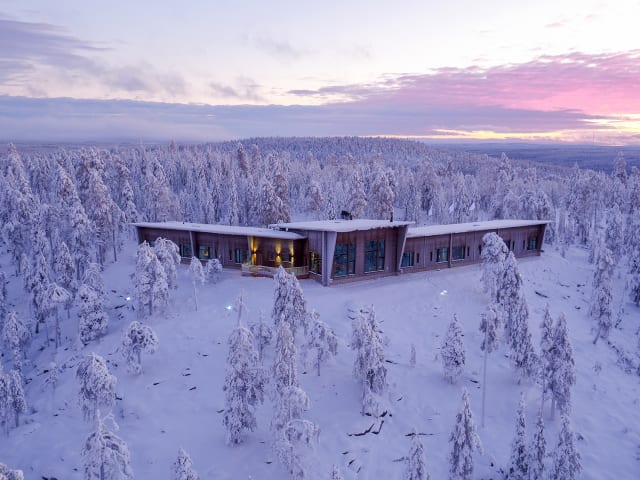
North of the Arctic Circle the sun stays above the horizon around the clock for weeks in summer. Finns call it yötön yö, the nightless night. For a visitor it’s disorienting at first and then addictive: hikes at midnight, a sauna at two in the morning and golden light that never quite ends.
Where and when
The midnight sun lasts longer the further north you go. Calculated for a flat horizon:
| Place | Midnight sun | How long |
|---|---|---|
| Rovaniemi | about 7 June – 7 July | about a month |
| Levi | about 29 May – 16 July | about 7 weeks |
| Saariselkä | about 25 May – 20 July | about 8 weeks |
| Kilpisjärvi | about 22 May – 23 July | about 9 weeks |
| Utsjoki | about 18 May – 27 July | about 10 weeks |
The dates are calculated for a flat horizon. Terrain, the height you watch from and the exact definition used shift the dates you actually observe by a few days.
Even south of the Arctic Circle, June and July nights never get truly dark, and on the coast at Kemi and Tornio you can see the midnight sun for a few days around midsummer. Height helps too: from a fell top you can see the sun above the northern horizon when it has already disappeared from the valley.
Sleeping in the light
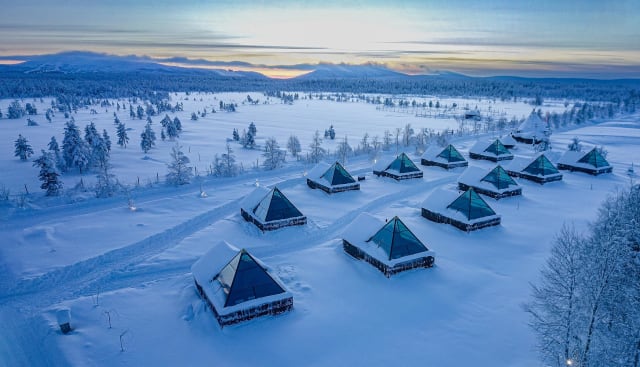
Your body clock will notice. Most hotels and cabins have blackout curtains, but not all of them, so an eye mask is a safe bet. Glass-roofed igloos are designed for dark winter skies; in summer many close or rely on blinds. The endless light can also make it surprisingly easy to stay up late, which is why blackout curtains or an eye mask matter.
In the bright summer sky you can’t see the northern lights in practice. They return with the dark nights from late August.
The weather
Summer weather in Lapland varies a lot. July is the warmest month, and spells of 25 °C or more are possible, but so are cool days of around 10 °C, and in June there can still be snow patches on the high fells. Pack for both: a warm layer and a rain jacket as well as shorts.
Mosquitoes
Be prepared for them. The mosquito season, räkkä in Finnish, peaks from around Midsummer to the end of July, especially in calm, humid weather near bogs and forests. There are fewer on windy, open fells and during the heat of the afternoon. Bring repellent, long sleeves and trousers, and consider a head net for hiking. By August the numbers drop sharply, which is one reason many Finns prefer late summer and autumn for hiking.
What to do
- Hike at night. Climb a fell for the midnight sun (see our national parks guide): in Pallas-Yllästunturi, Urho Kekkonen or Pyhä-Luosto national parks, or up Saana at Kilpisjärvi. The Hetta–Pallas trail, about 50 km with wilderness huts along the way, is one of Finland’s classic multi-day hikes.
- Paddle or fish. Rivers and lakes are open and the light lasts all night. Simple angling with a hook and line is usually free, but not in the rapids and flowing stretches of salmon and trout waters or in other restricted areas. Lure fishing requires the state fishing management fee, and more rods need a permit, so check the rules for each water.
- Celebrate Midsummer. Juhannus falls on the weekend between 19 and 26 June. Finns head to their cottages, light bonfires by the water and go to the sauna. Many shops and restaurants close or shorten their hours, especially in small places, so plan ahead.
- Watch films round the clock. Every June since 1986, the Midnight Sun Film Festival in Sodankylä has shown films day and night under the midnight sun.
Before the season: May
May is one of Lapland’s quietest travel months. The snow melts, trails are muddy or flooded, and many hotels, restaurants and tour companies close between the winter and summer seasons. Late May can still be lovely, especially in the south of Lapland, but check what’s open before you go.
Where to stay
A cabin by a lake with a wood-burning sauna is the Finnish summer ideal: long, bright evenings, and a swim in the lake after the sauna. Browse stays open in June and July, or stays with a private sauna.