Finnish Lapland is an excellent place to see the aurora borealis. The auroral oval, the ring around the magnetic pole where auroras are most common, lies over northern Scandinavia, and in the far north of Finland auroras appear on about three out of four clear, dark nights, according to the Finnish Meteorological Institute.
That still doesn’t make them a sure thing. Three things have to come together: darkness, a clear sky and activity from the sun. You can control the first, plan for the second and only hope for the third.
When: late August to mid-April
Auroras happen all year round, but you can only see them when the sky is dark. North of the Arctic Circle the nights become dark enough in the second half of August, a little later in the far north. The season ends around mid-April, when the nights grow too light again.
Within that season:
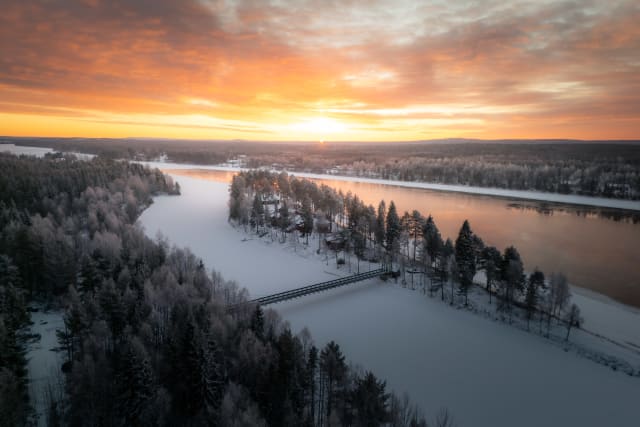
- September and October are underrated. The lakes haven’t frozen yet and reflect the lights, the nights are mild enough to wait outside comfortably, and geomagnetic activity tends to be slightly higher around the equinox.
- November to January have the longest nights but also the most clouds. In Finland, November and December have the fewest clear days of the year.
- February and March combine long, dark nights with more settled winter weather and a snowy landscape. March is another equinox month.
During the night, auroras are most often seen between about 9 pm and 2 am, but they can appear whenever it’s dark. Be patient: activity often comes in bursts, with quiet spells in between.
Where: north, and away from lights
The further north you go, the more often the auroras are overhead rather than low on the northern horizon. In Finland, Kilpisjärvi, Utsjoki, Inari and Saariselkä see them most often. From Rovaniemi and Levi you’ll still see auroras regularly, especially when you look north.
Artificial light matters as much as latitude. A lake, a bog or an open fell with a clear view to the north beats the centre of even the most northerly village. If you stay in a town, plan a short drive or a tour out of the lights.
Clouds are the real obstacle
Cloud is often a bigger practical obstacle than a quiet sun. Cloud cover can differ a lot within 50 km, so flexibility helps:
- Check the cloud forecast in the afternoon and again in the evening.
- If you have a car, be ready to drive towards clearer skies. Don’t stop on the road itself; use lay-bys and car parks.
- Guided aurora tours do the chasing for you, which is their main advantage if you don’t drive.
Reading the forecasts
The Kp index you’ll see in apps is a global measure of geomagnetic activity on a scale from 0 to 9. In Lapland you don’t need a high number: at Kp 2 or 3, auroras are often right overhead in the north. High values mainly mean that auroras can be seen further south. Kp is not a local aurora probability, so don’t use it alone to decide whether to go out.
More useful locally is the Finnish Meteorological Institute’s auroras and space weather service, which shows the magnetic activity measured at stations in Lapland and the probability of auroras. When the activity near you crosses the threshold and the sky is clear, it’s time to go out. Many hotels and cabins also have an aurora alarm.
Forecasts more than a day ahead are rough. In October 2024, NASA and NOAA announced that the sun had entered the maximum period of its roughly eleven-year activity cycle. The exact peak is only confirmed afterwards, but the years after a maximum still bring strong displays, and some of the biggest storms of a cycle have come during its declining phase.
What you’ll actually see
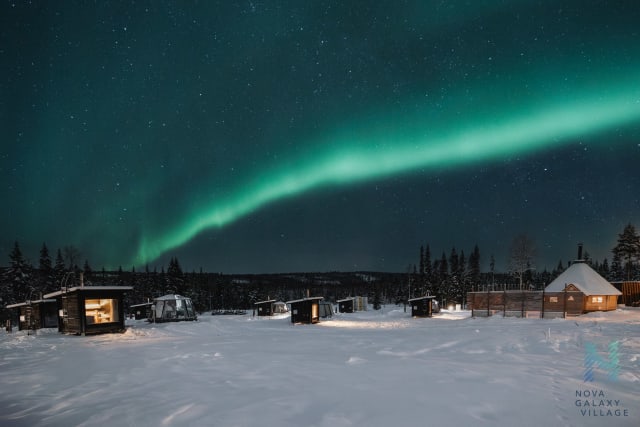
Most auroras are pale green arcs and curtains, sometimes so faint that they look like a greyish cloud to the eye. Cameras pick up more colour than we do, so a photo is often greener and brighter than the view itself. During strong displays the lights move fast, ripple and change shape, with pink or purple lower edges and occasionally red at the top.
Taking photos
- With a phone: use night mode and rest the phone on something steady. Turn off the flash.
- With a camera: use a tripod, a wide-angle lens and manual settings. Start with the aperture wide open, ISO 1600–3200 and an exposure of 2–10 seconds, shorter when the aurora moves fast. Focus manually on a bright star or a distant light.
- In the cold: batteries drain fast, so keep spares in an inside pocket. When you go back indoors, put the camera in a bag first so that moisture doesn’t condense on it.
Dress for standing still
Waiting for auroras means standing or sitting still in the cold for an hour or more, which feels much colder than skiing or walking. Wear more layers than you think you need, warm boots, mittens rather than gloves, a hat and something to cover your face. A thermos of something hot does wonders for morale. On lakes, only go out on ice that locals use, and never in early winter.
Watching from bed
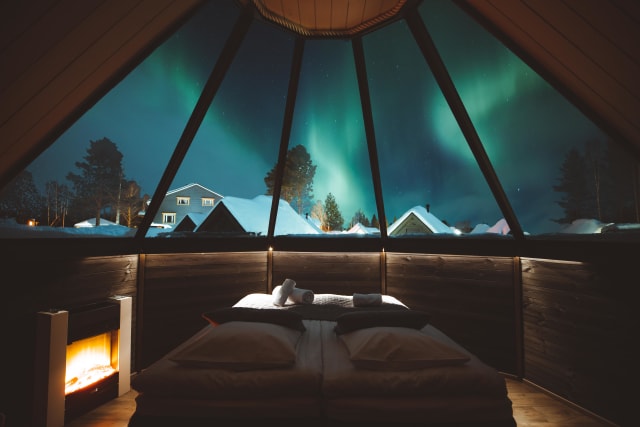
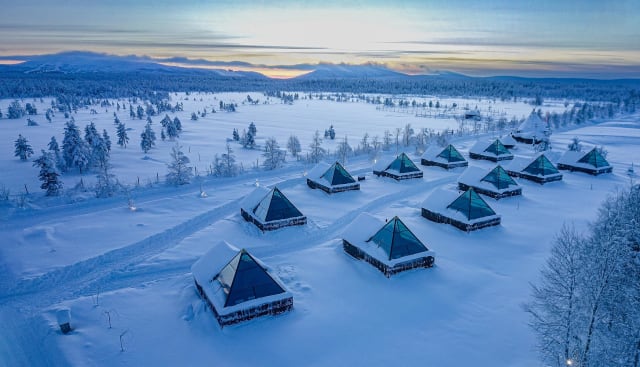
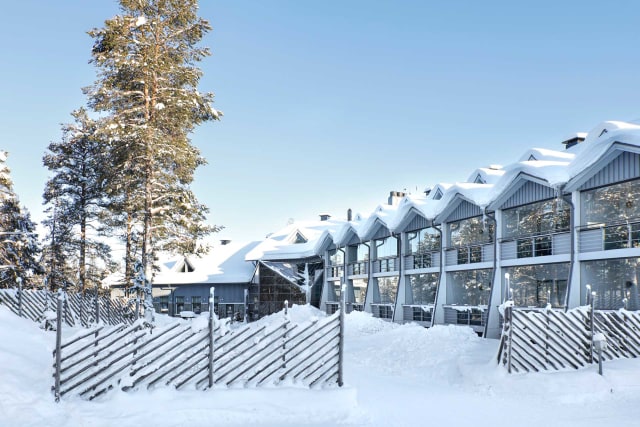
If you’d rather watch from under the covers, glass-roofed cabins make that possible. They don’t make auroras more likely, but they make the waiting easier, especially with small children. Read more in our guide to unusual places to stay, or browse stays chosen for aurora watching.