In late summer the first night frosts reach the fells, and within a couple of weeks the landscape turns red, orange and gold. Finns call it ruska. For many it’s the best time of year in Lapland: far fewer mosquitoes, crisp air, berries everywhere and dark nights for the northern lights.
When to go
Ruska usually begins in the northern fells in late August and peaks in the first half of September, then moves south as the weeks go on. Around Rovaniemi and in southern Lapland the colours are at their best a little later in September. At any one place the most colourful stage usually lasts only a week or two, and the timing varies from year to year with the weather: an early frost brings it on, and a storm can strip the leaves in a day.
If you can choose only one week, aim for the first half of September in the north (Kilpisjärvi, Saariselkä, Inari, Ylläs and Pallas) and mid-September further south.
What turns red
The most striking colours are close to the ground. Dwarf birch and bilberry turn deep red, bog bilberry and alpine bearberry glow crimson, and the mountain birches on the fell slopes go bright yellow. Open fells and aapa bogs show it best: from a fell top the whole landscape looks painted.
Hiking
Autumn gives hikers drier trails, far fewer insects, cooler weather and less crowded huts than midsummer. Good areas include (read more in our national parks guide):
- Pallas-Yllästunturi National Park: the Hetta–Pallas trail, about 50 km along a chain of fells, is one of Finland’s classic hikes. Shorter day walks start from Pallas, Ylläs and Hetta.
- Urho Kekkonen National Park, next to Saariselkä: easy day trails near the village and vast wilderness beyond.
- Pyhä-Luosto and Salla national parks: gorges, fell tops and old forests with good day routes.
- Kilpisjärvi: Saana fell, and the hike to the cairn where Finland, Sweden and Norway meet.
Along the trails there are free open wilderness huts, meant for one-night stays by hikers travelling independently. Read about hut etiquette in our guide to unusual places to stay.
Berries and everyman’s rights
Finland’s everyman’s rights let anyone walk in nature and pick wild berries and mushrooms, on private land too, as long as you keep away from people’s yards and don’t cause damage. Late summer and autumn is harvest time:
- Bilberries from late July through August
- Cloudberries on the bogs from mid-July into early August. Read more in our cloudberry guide.
- Lingonberries from late August through September
- Crowberries on the fells in August and September
Only pick mushrooms you know for certain: some of Finland’s deadliest mushrooms look harmless.
Weather and clothing
Early September days are typically 5–10 °C, nights can drop below freezing, and the first snow can dust the fell tops. Bring warm layers, a hat and gloves, waterproof boots and a rain jacket. The weather on the open fells can change quickly.
The auroras are back
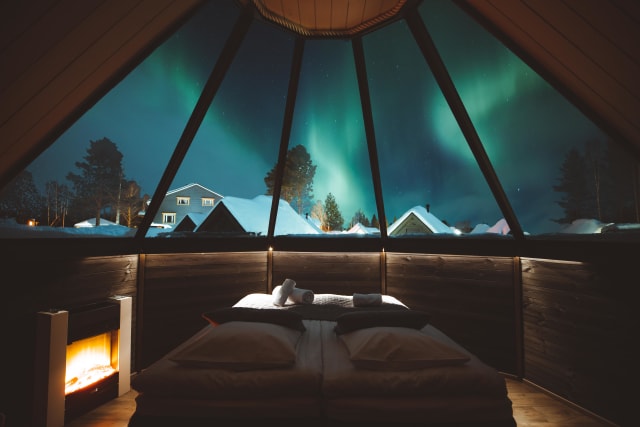
By late August the nights are dark again and the aurora season begins. Autumn has advantages over winter: the lakes aren’t frozen yet and mirror the lights, and the nights are mild enough to wait outside comfortably. Read more in our northern lights guide.
Where to stay
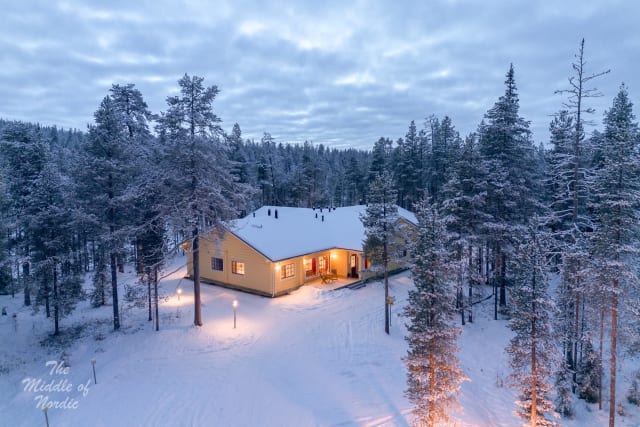
In the fell resorts autumn is quieter and often cheaper than winter, and a cabin with a sauna after a day on the fells is hard to beat. Browse stays open in September or cabins and villas.