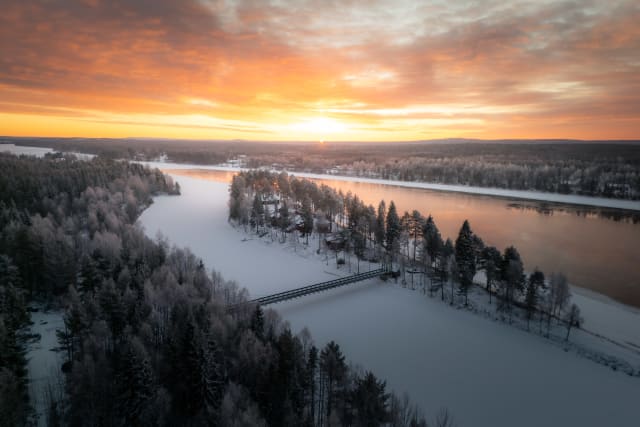
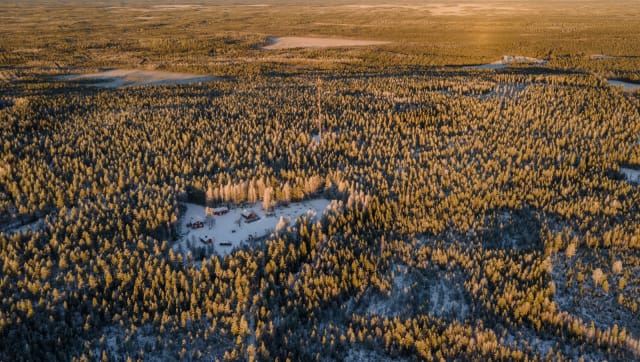
Lapland has a knack for unusual places to sleep. Some are about the sky, like cabins with glass roofs. Some are about the cold, like hotels built from snow every winter. And some are about getting away from everything, like the free huts along hiking trails. This guide goes through the main types, what they are like in practice and what to ask before you book.
A word on price first: special stays are usually noticeably more expensive than a regular hotel room or cabin in the same area, and the most sought-after dates (Christmas, New Year and the February–March holidays) sell out early. October, November and April are often calmer.
Glass igloos and glass-roof cabins
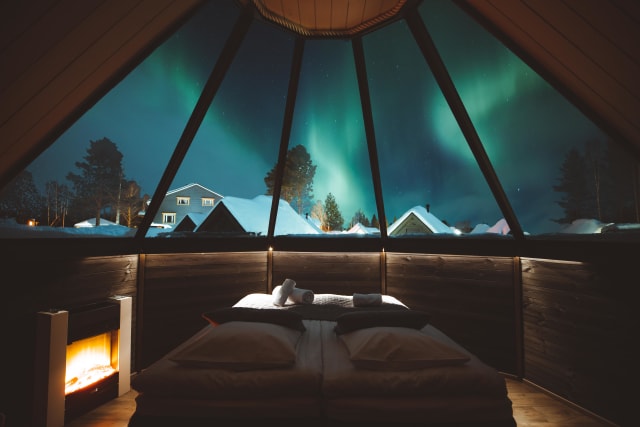
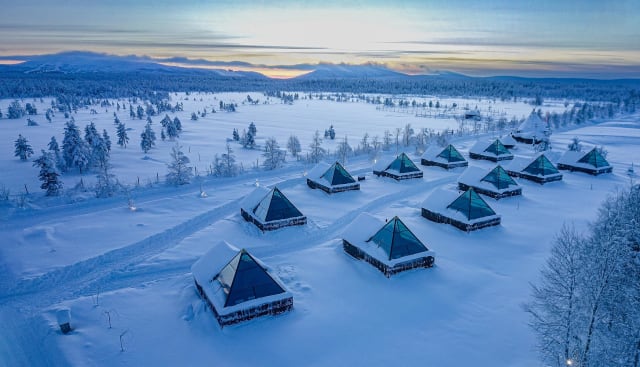
A glass igloo is a small room or cabin with a glass dome or glass roof above the bed, so you can watch the sky without going out into the cold. Around the fell resorts and Rovaniemi you’ll find everything from simple domes to spacious aurora cabins with a kitchen, a sauna and a wall of windows facing north.
What decides whether one is worth it:
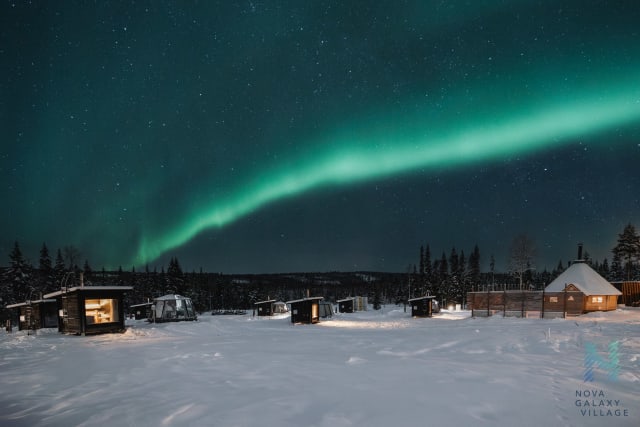
- Darkness outside. The glass only works if there is little artificial light nearby. A cabin on the edge of a lit village sees less than one out in the forest or by a lake.
- Heated glass. Most modern glass roofs are heated so that snow and frost don’t build up. Ask, because a roof covered in snow shows nothing.
- The bathroom. Newer cabins have their own; some older igloos share facilities in a separate building, which matters at −25 °C.
- An aurora alarm. Many places will wake you by phone or app when auroras appear, so you can sleep in between.
Be realistic about the northern lights: a glass roof doesn’t make auroras more likely, it just makes watching them more comfortable. Clear skies matter far more than the room. The aurora season runs roughly from late August to mid-April. In summer the nights are too bright, and a glass roof lets in the midnight sun: some glass igloos close for the summer, others have blinds. Read more in our northern lights guide, or browse stays chosen for aurora watching.
Snow hotels
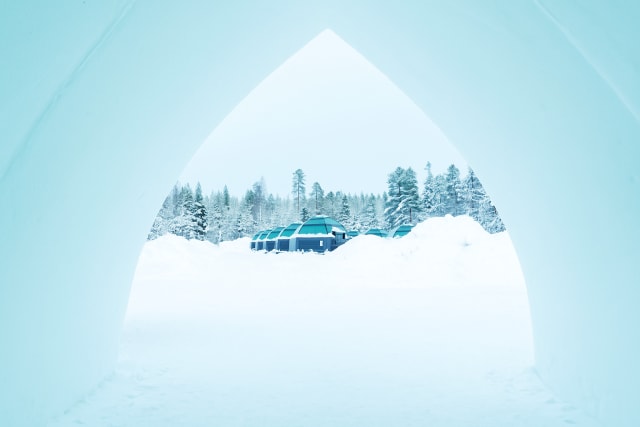
Snow hotels are built for the winter season from snow and ice, often with a new theme each year and ice sculptures made by artists. They typically open around Christmas or in January and stay open until March or April, depending on the place and the weather.
Inside, the temperature stays at around 0 to −5 °C whatever the weather outside. You sleep on a bed with an ice base, a mattress and reindeer hides, inside a thermal sleeping bag. It sounds harsh, but most people sleep reasonably well. A few things help:
- For many travellers, one night is enough. Most people combine a night in the snow with warm rooms for the rest of the trip, and many snow hotels include a warm room or cabin for changing and showering.
- Wear thin, dry layers in the sleeping bag, and keep tomorrow’s clothes in the bag with you so they aren’t frozen in the morning.
- Toilets and showers are in a heated building nearby.
In Finnish Lapland you’ll find snow hotels near Rovaniemi (Arctic SnowHotel in Sinettä, about 30 km from the city), between Levi and Ylläs (Lapland Hotels SnowVillage in Lainio) and on the coast in Kemi (the SnowCastle). They aren’t necessarily built every winter, so check that the one you have in mind is open before planning a trip around it. Most also welcome day visitors, so you can see the snow rooms without sleeping in one.
Log cabins with a sauna
For many Finns, the most special place to stay in Lapland is simply a log cabin by a lake or on a fell slope, with a wood-burning sauna and nobody else in sight. Cabins are also the most common type of accommodation in our listings.
They range from modern holiday homes with a dishwasher to old wilderness cabins with an outdoor toilet and water carried from a well. Before booking, check:
- whether bed linen, towels and final cleaning are included or cost extra
- whether the sauna is private or shared, and wood-fired or electric
- how the road is maintained in winter, and how far it is to the nearest shop.
Browse cabins and villas or stays with a private sauna.
Open wilderness huts
Along the hiking trails of Lapland’s national parks and wilderness areas there are open wilderness huts, most of them maintained by Metsähallitus, Finland’s state nature agency. They are free and unlocked, and you can’t book them. According to Metsähallitus, they are meant for individual hikers travelling independently, for one night. There is a wood stove and bunks, and usually a dry toilet and a woodshed nearby. You bring your own sleeping bag, food and cooking gear.
The basic etiquette is simple: those who arrived earlier make room for those who come later, so that everyone can dry their clothes and rest, and hikers travelling under their own power have priority for overnight stays. Still, be prepared for the hut to be full, and bring a tent. Leave the hut clean with firewood ready for the next visitor. Larger groups and people staying several nights use a tent or reservable and rental huts, which you book in advance for a fee.
A wilderness hut isn’t a holiday base, but a night in one in the middle of the fells is among the most memorable things you can do in Lapland. It works best in summer and autumn, and in winter for experienced ski trekkers.
Tree houses, bubbles and farm stays
Lapland also has its one-offs: tree-house suites on forested hillsides near Rovaniemi, transparent bubble tents at wilderness camps, and cabins on reindeer farms where you can join in the daily work. If you’re interested in Sámi culture, look for places and experiences run by Sámi themselves. The Sámi Parliament of Finland has published guidelines for responsible visitors that are worth reading before you head north. See also our guide to travelling in the Sámi homeland.
Five questions to ask before booking
- How much artificial light is there around the building at night?
- Is the glass roof heated, and is there an aurora alarm?
- Where are the toilet and the shower?
- What does the price include: linen, cleaning, breakfast, a warm room at a snow hotel?
- How do you get there without a car, and is the road ploughed in winter?
Every unusual stay in our listings is shown in the same order as everything else, and the order never depends on commission. How we rank stays.